
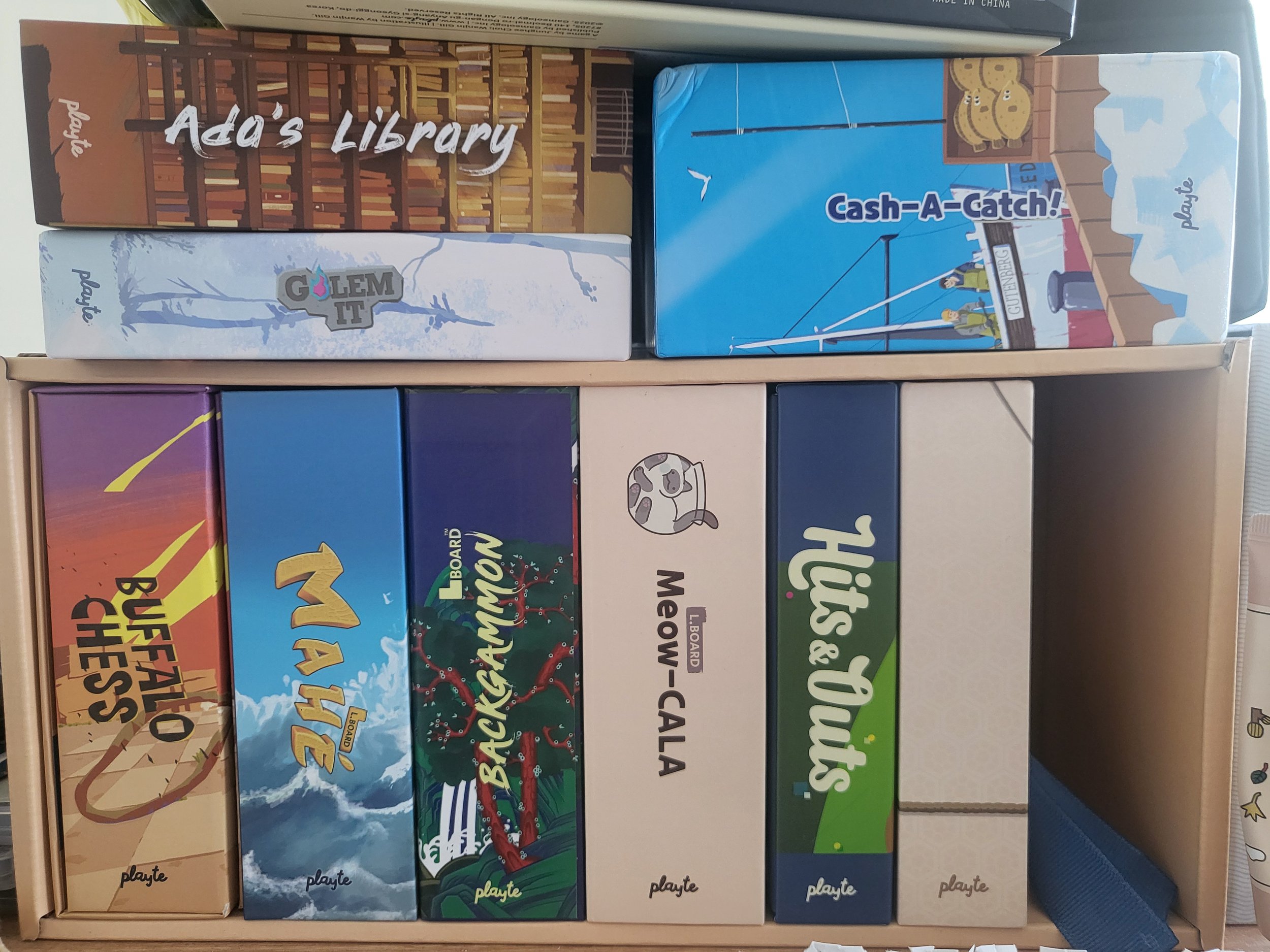
I have something of an obsession with Korean publisher Playte Games. I currently live in Korea, so it is very easy for me to buy their games every month thanks to their low price point, but even beyond that they also feel tailor made for my interests. They do lots of reprints of classic games from simpler times (I am curmudgeonly about the current state of many hobby games, if I’m honest with myself), and in small boxes that I can easily fit on my shelf. I hate big boxes, get out of here with that shit. Gimme games that I can toss in my bag and bring with me. I don’t have a huge basement, I don’t drive to my gaming meet up, please don’t give me games that take a boardroom table to setup and weigh 10 kilograms. So yeah, Playte is like laser focused on what I want out of games, even if I don’t love everything they make.
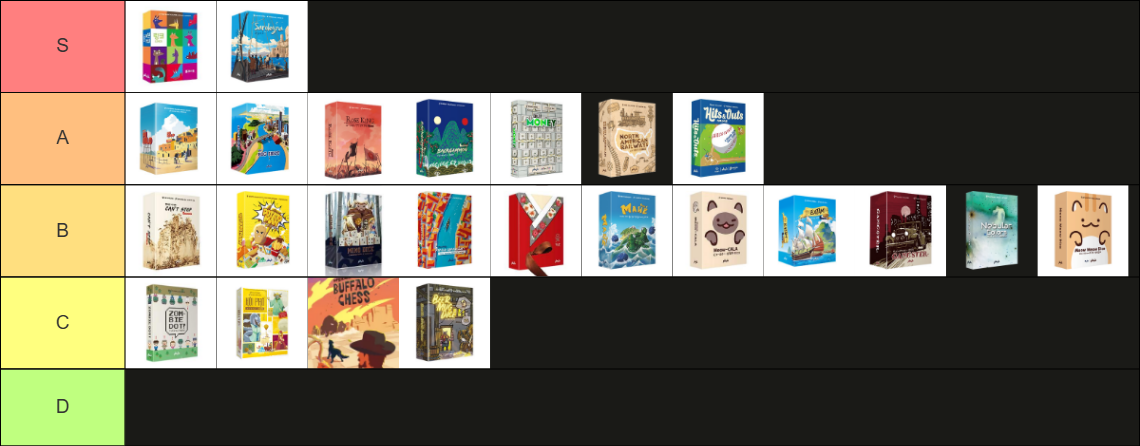
My enthusiasm for Playte has caused me to deviate from my normal reviewing behavior, which is to focus on historical games and wargames, and write about how I feel about their latest and greatest. I usually don’t review these kind of games, not because I don’t like them, but because I struggle to have much to say. I focus on historical games because I am a historian, so I have a lot to say about games that tap into history and try to represent it accurately. My compromise for my inability to say much about traditional hobby games besides “it’s fun” or “it’s not very much fun” is to do a tier list. I already did part 1, which you can read here, this is the Playte Games Tier List (Part 2).
The Ranking:
S: An amazing game, I will play it at literally any time.
A: Great game, I will frequently suggest we play it.
B: A good game, I’m generally happy to play it.
C: It’s okay, I had fun but I’m not eager to revisit it.
D: Not fun, probably wouldn’t play again.
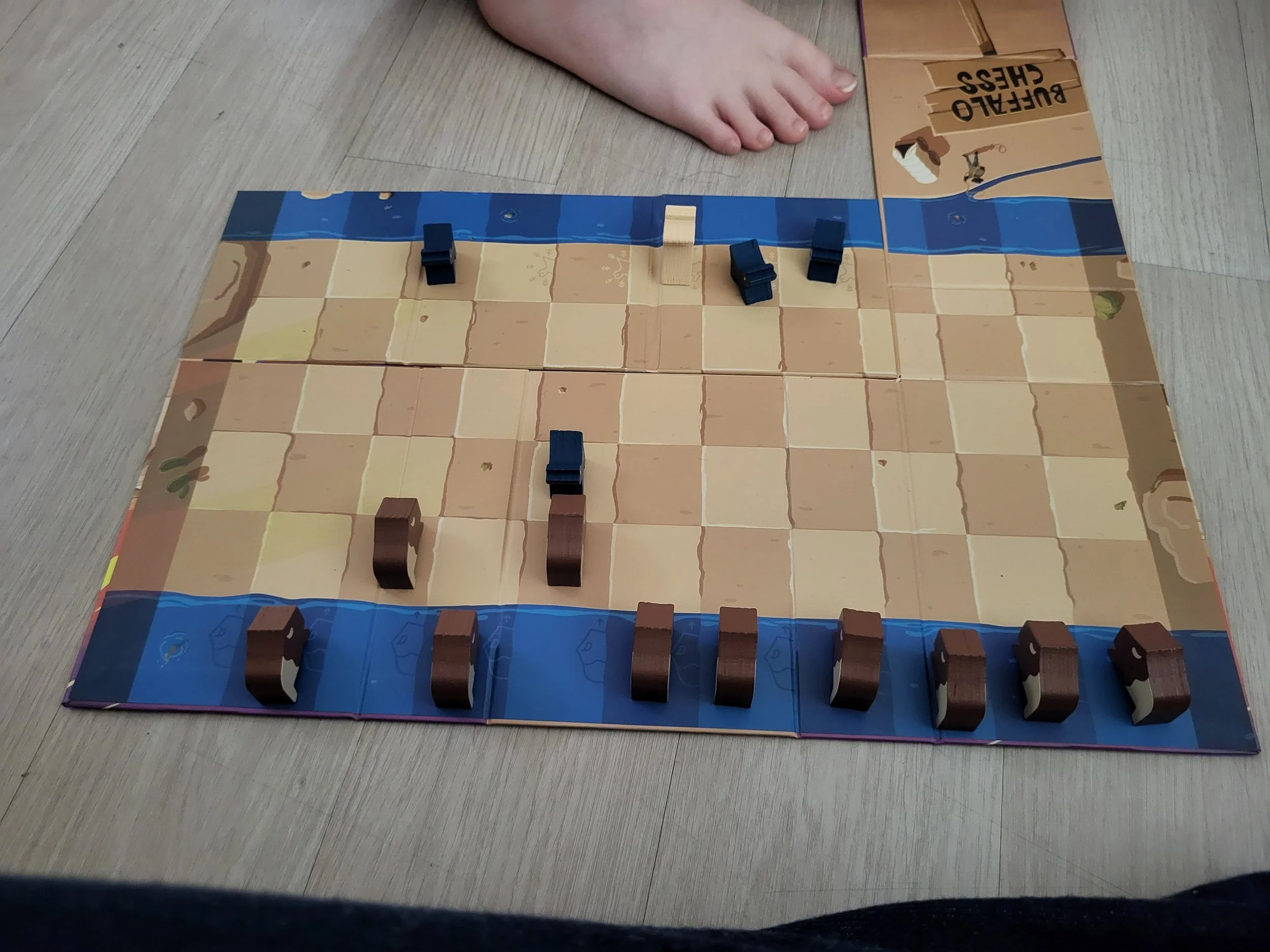
Buffalo Chess by Alex Randolph, Art by Wanjin Gil
Buffalo Chess is a game of buffalo vs cowboy, where the buffalo can only move forward one square at a time and must escape past the cowboy (who moves as a king from chess) and his dogs (who move as queens, but cannot capture buffalo). It’s fun, but if I’m honest it’s aggressively fine. However, my daughter loves it, so I have played Buffalo Chess so, so many times. While it’s not a favorite, it’s a lot better than Snakes and Ladders, and I love that she loves it. It has since been redone with a zombie theme, and while the L-Board for that one looks a bit better, I prefer the non-zombie theme.
Rank: C+
L-Board Rank: C
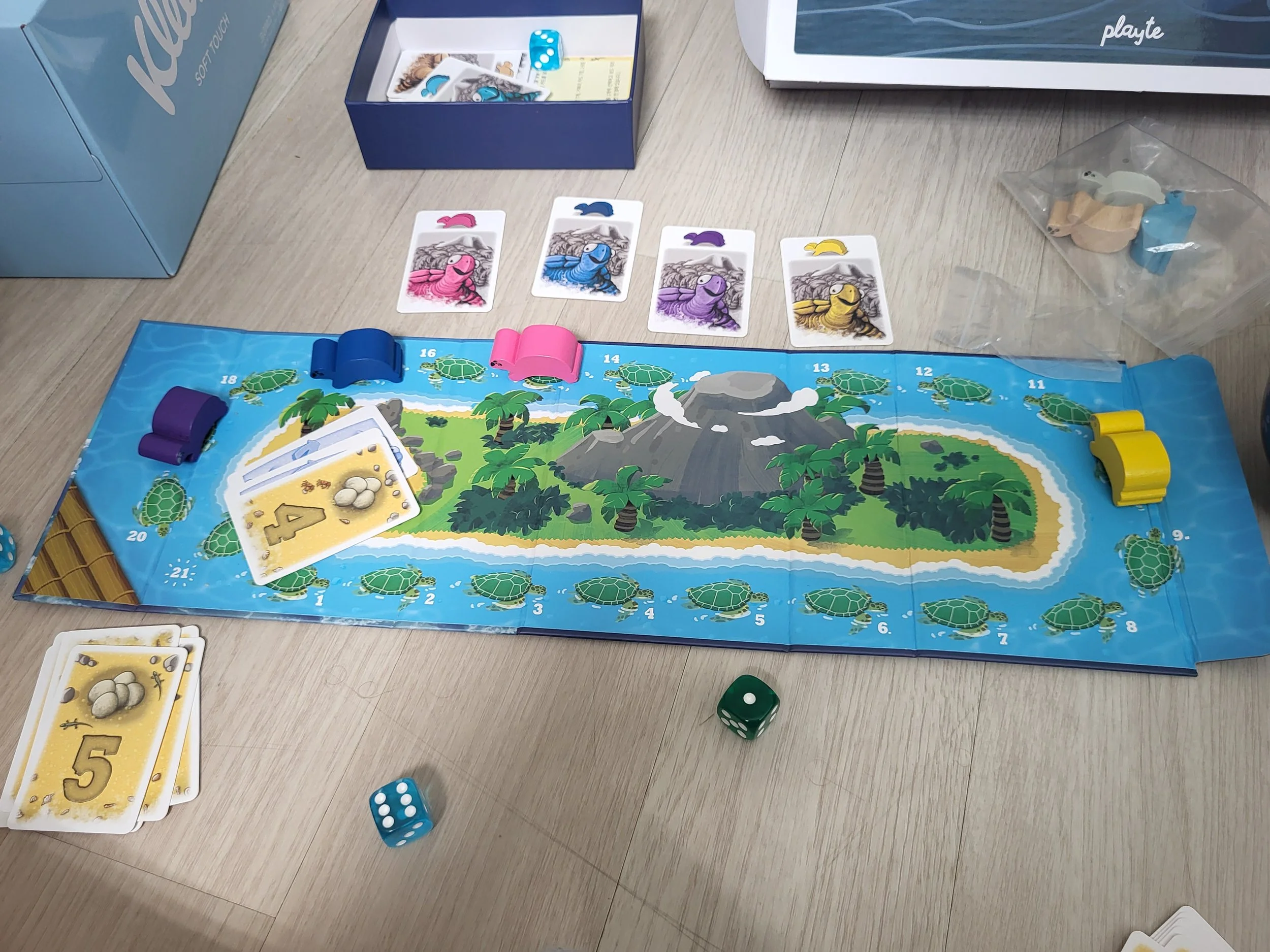
Mahé by Alex Randolph, Art by Atlier198 and Wanjin Gil
Mahé is a fun, but not overly complex, push-your-luck racing game. You’re rolling dice to try and get your turtles to race around the board. You first roll one die, and then can roll another one (and another one) for a final movement value of the sum of your dice times the number of dice you rolled. However, if the sum of your dice is over 7, you go bust and back to the start. I think the game is a little too long for what it is, but, again, I’ve had a lot of fun playing it with my daughter, so a lot can be forgiven. If you want a fun roll and move racing game, this delivers.
Rank: B
L-Board Rank: B
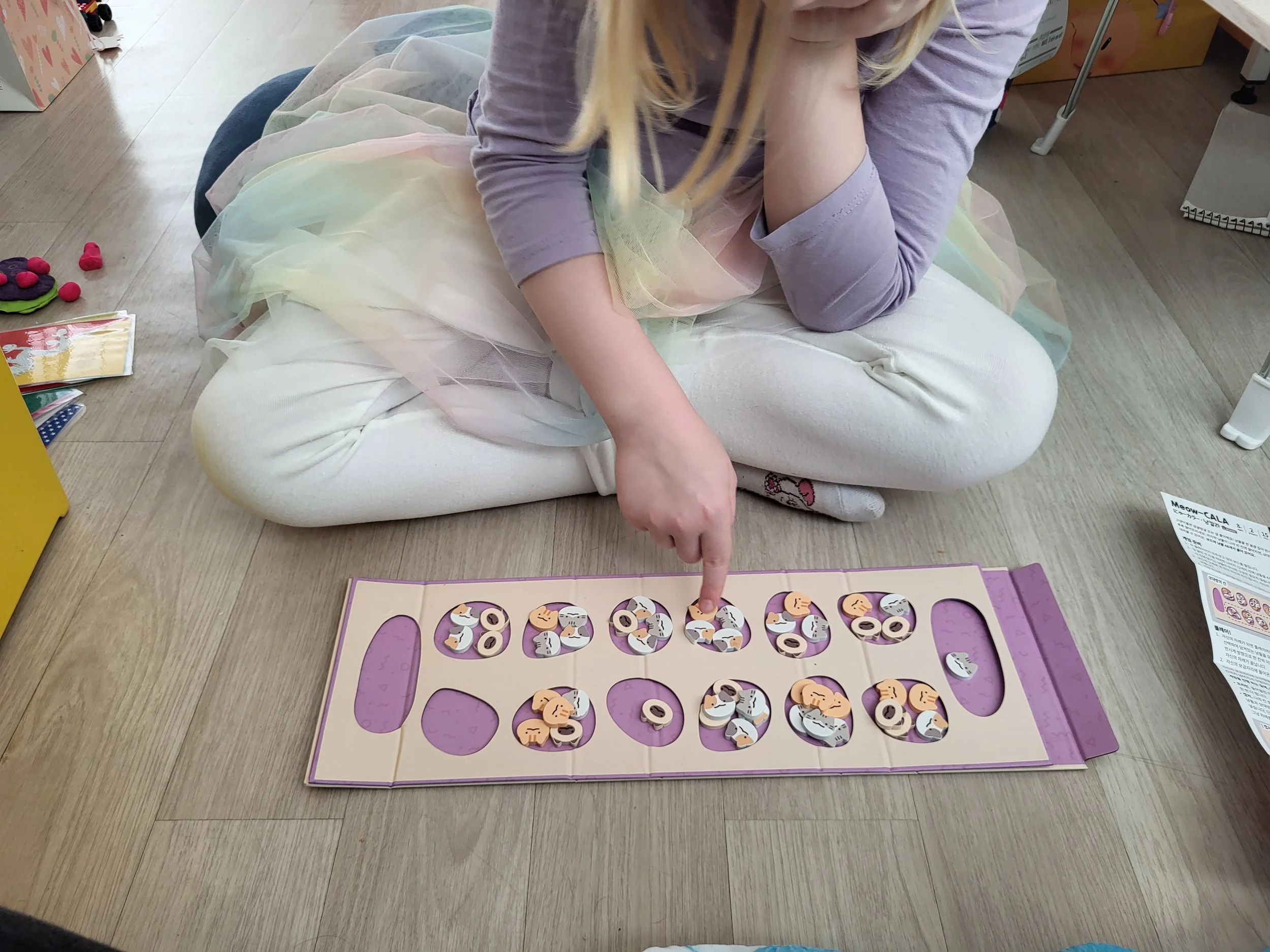
Meow-Cala (traditional game), Art by DODAM and Yeonhwa
It’s just mancala but with cute little cat pieces. Another father-daughter favorite, and look, it’s mancala, it’s fun. The board is honestly a little small for the pieces, and the containers for the little cats can quickly overflow. I think it’s fine, because it’s nice to have mancala in a small package, but if you’re a mancala fan, you’d be better off buying a proper wooden board.
Rank: B-
L-Board Rank: C
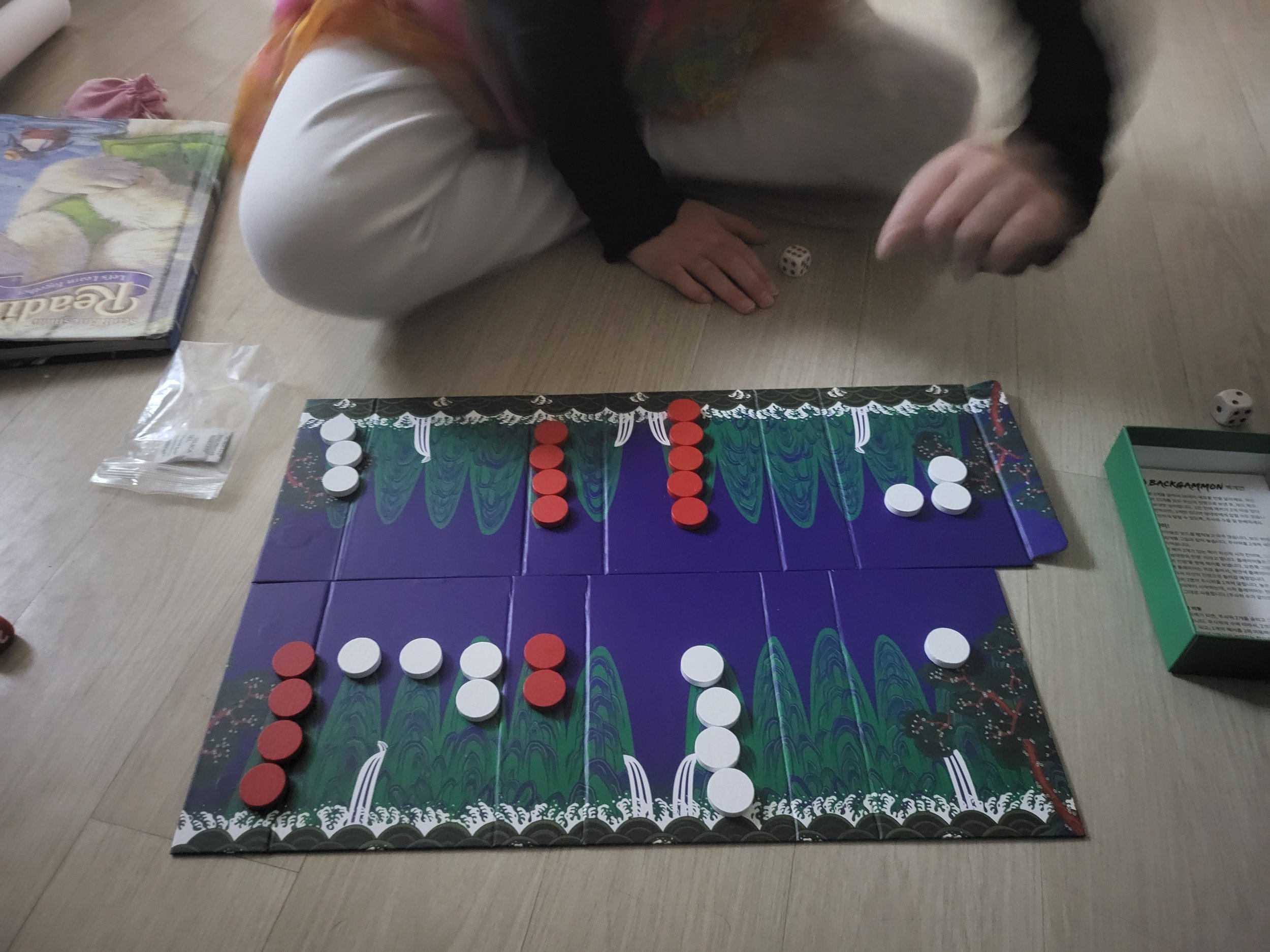
Backgammon (traditional game), Art by Wanjin Gill
Hey look, it’s backgammon! The board for the Playte edition uses the famous painting of mountains and the sun and moon that was painted on screens that were positioned behind Korean monarchs. It’s really pretty, and the game is backgammon, which is a stone cold classic. I do think the art does make the game a little harder to parse on a few places – it’s a good adaptation, but it could be a bit better in terms of usability. That’s a small quibble, though, and it’s backgammon on a pretty board so whose to complain?
Rank: A
L-Board Rank: B+
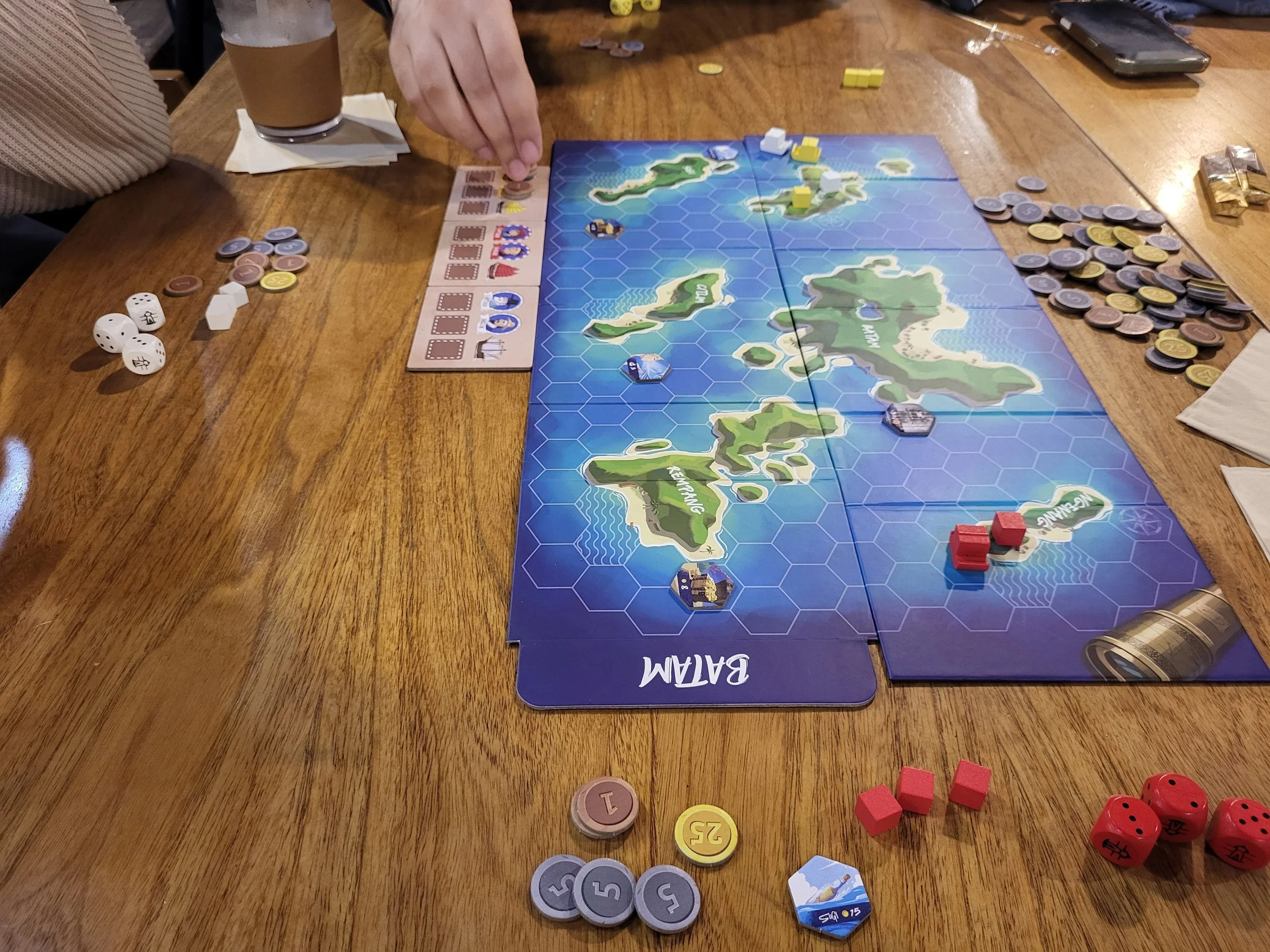
Batam by Stefan Dorra, Art by Wanjin Gill
Stefan Dorra’s Sardegna is among my favorite games that Playte has published, but I didn’t like Batam quite as much. This is a racing game where you roll dice and give them to your opponents in exchange for money – and at the end it’s the richest, not the fastest, player who wins. It’s a lot of fun, and I enjoyed it, but something about it didn’t fully click for me. I’d be happy to play Batam again if someone asked, but there are many other games I’d prefer to pull off my shelf before it.
Rank: B+
L-Board Rank: A
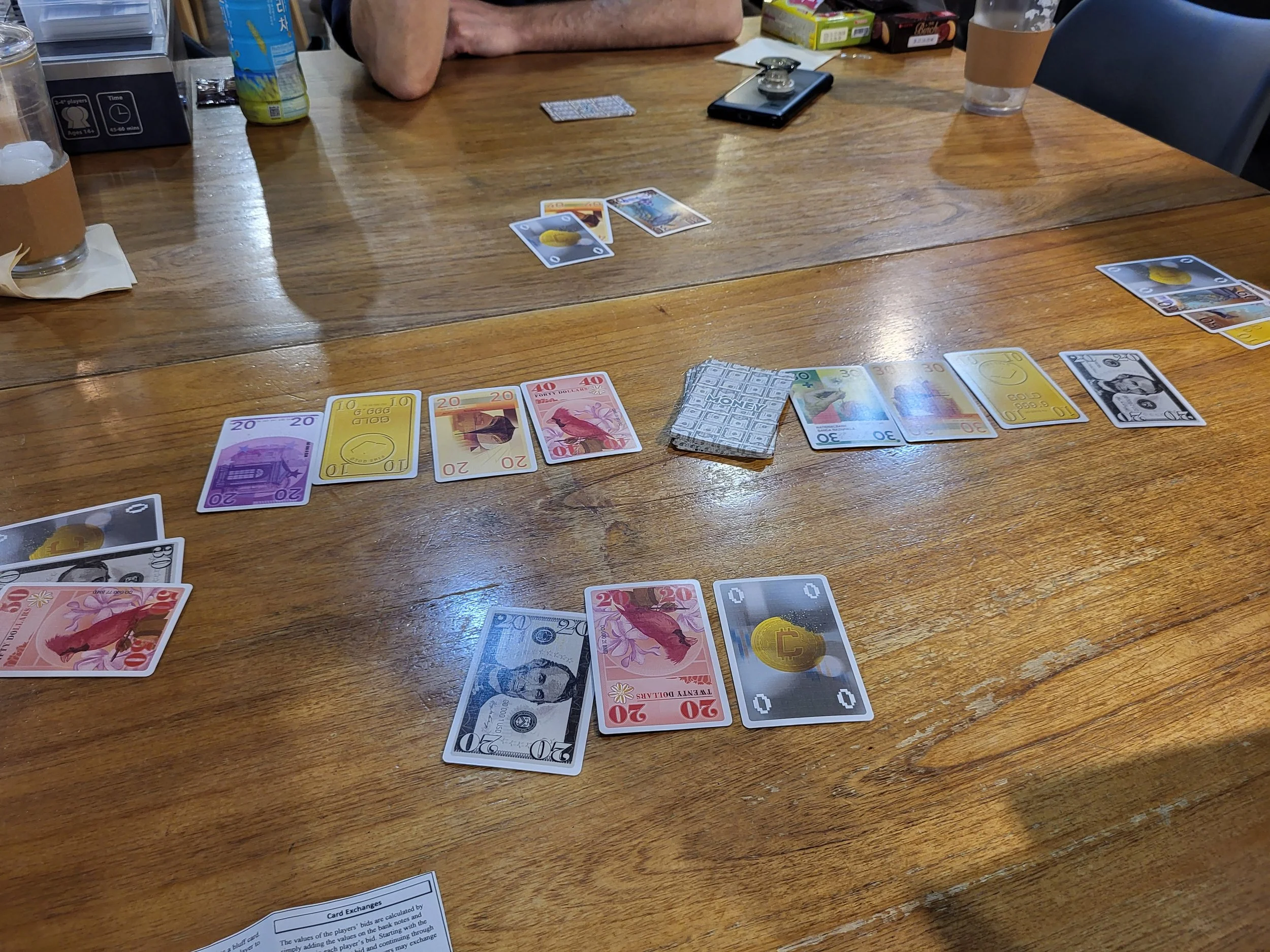
Money by Reiner Knizia, Art by Wanjin Gil
I’ve played a couple of Knizia auction games before (Modern Art is the best, Ra is pretty good, Medici is fine) but I’m still interested in seeing what else the doctor brings to this type of game. In Money you have a hand of cards representing different types of money and you bid cards from your hand to either take sets of cards from the central market or else to take other player’s bids. It has all the little touches that make a Knizia game interesting. It sits closer to a light filler game than many of Knizia’s other auction games, but I don’t mind that. This edition is pretty and comes in a small box, which makes it easy to throw in a bag and play when you have 20 minutes free.
Rank: A
L-Board Rank: n/a
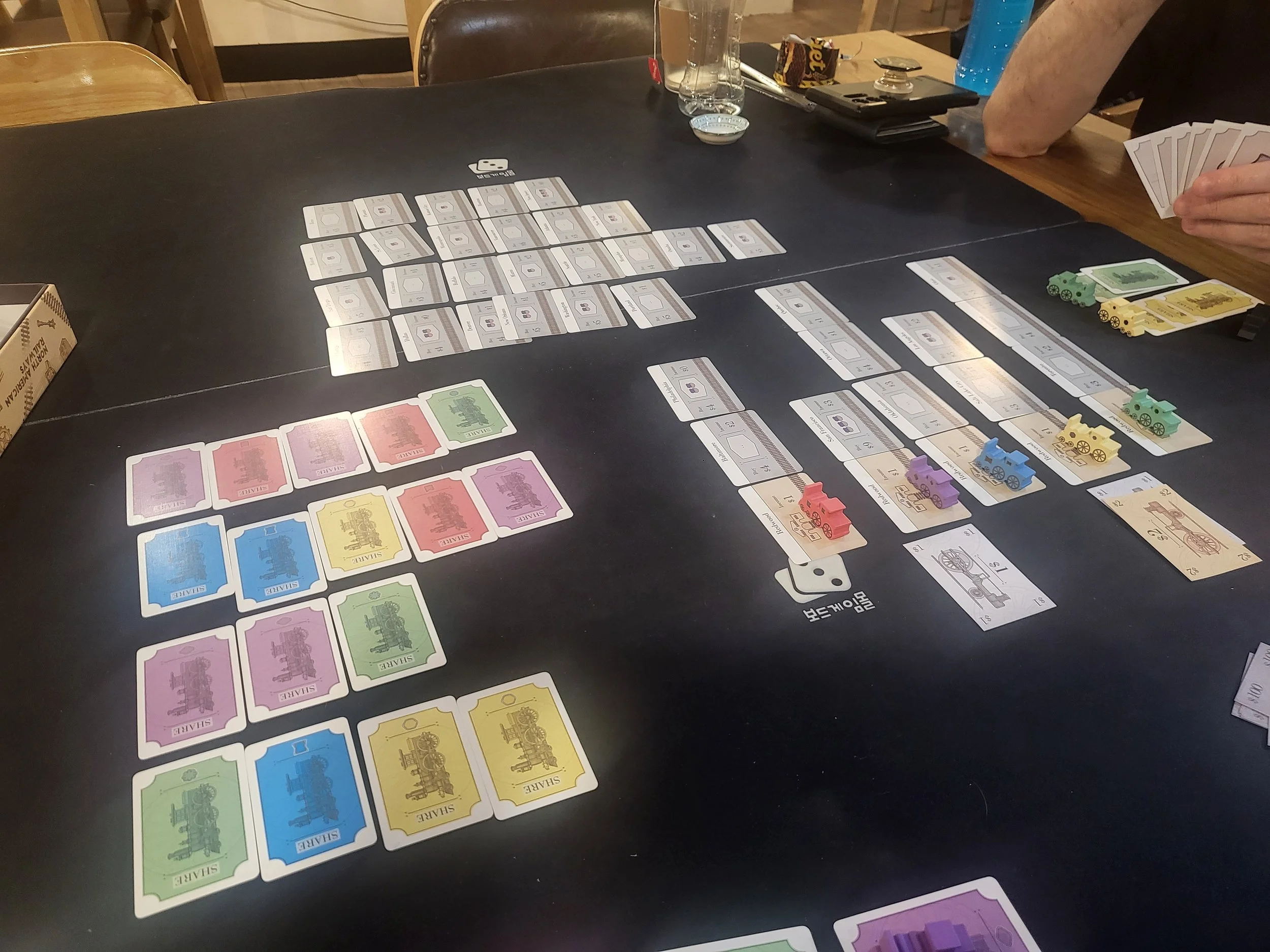
North american Railways by Peer Sylvester, Art by Wanjin gil
I love trains, but I don’t play a lot of train games because I don’t really like stock markets or economic games. There’s something about them that has historically not clicked for me. However, North American Railways was recommended to me, and I’ve generally been impressed with Peer Sylvester’s designs, so I decided to give it a shot, and I was pleasantly surprised by it. It’s a train game without a map (and I love a map), but that abstraction combined with its simplicity (the game only has 8 pages of rules) came together to make a game that felt like it captured the stock market jockeying of a classic train game without the brain melting that I can’t handle.
In a given turn you first buy shares in the company. This has a fun semi-auction element where if you buy a share that someone else owns then they can buy it instead but you get half the money. It’s a nice wrinkle where you want to guess how much money to spend, and then half the money you spend goes into the company’s funds, so you don’t necessarily want to spend the least money because owning stock in a broke company won’t be very good. Then there’s buying routes and cashing in the money from the trains, where there are interesting decisions to make, but it’s in the share buying that I think the game really lies.
If I have one complaint it is the use of thin paper money. The back of the box says it includes money cards, but this is thin paper money not thicker cardstock and I found that a bit disappointing. I have a set of the Playte poker chips so I might be able to replace the money with those at least.
While probably not a satisfying experience for 18xx heads, I had a great time with North American Railways and I’m keen to play it some more.
Rank: A
L-Board Rank: n/a
Hits & Outs by Ron Halliday, Art by Yoshiaki Tomioka
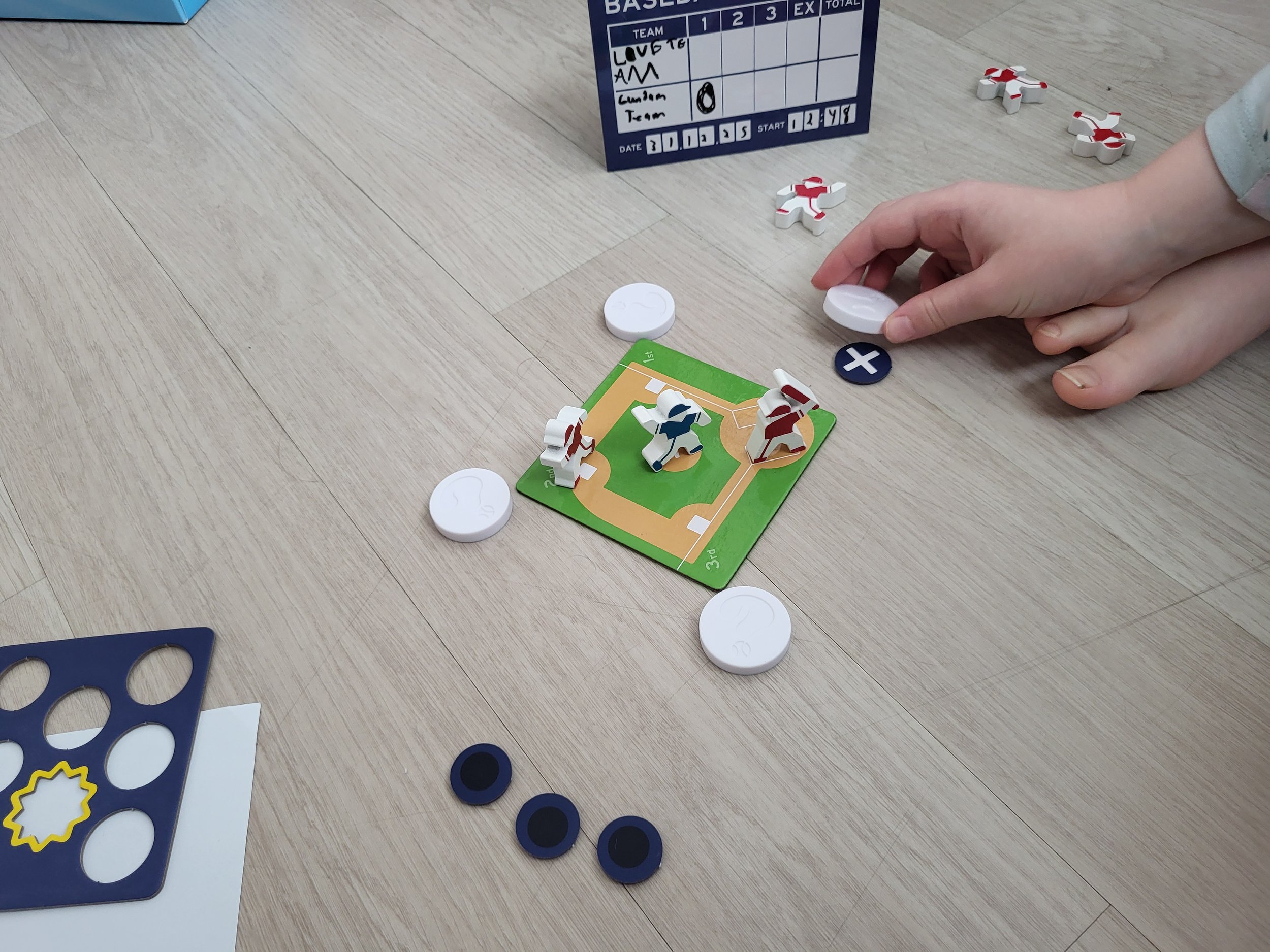
Since becoming something of a baseball fanatic (KBO specifically) in 2025 I’m on the lookout for good baseball games. Hits & Outs strips baseball down to an incredibly simple game about trying to read your opponent. The pitcher hides one hit and three outs under disks and assigns them to each of the bases and home, and the batter reveals them to hopefully find as many hits as they can without getting any outs. A hit grants progress based on its location (at first, is 1 base, on third is 3 bases, at home is a home run), so it’s safer to place the hit at first, but your opponent knows that. It sounded a little too simple to be good, but honestly, I’ve found it incredibly entertaining and fast. Probably not that great if you don’t like baseball, but if you want a baseball game that plays in 10-15 minutes this is a good one!
Rank: A
L-Board Rank: n/a
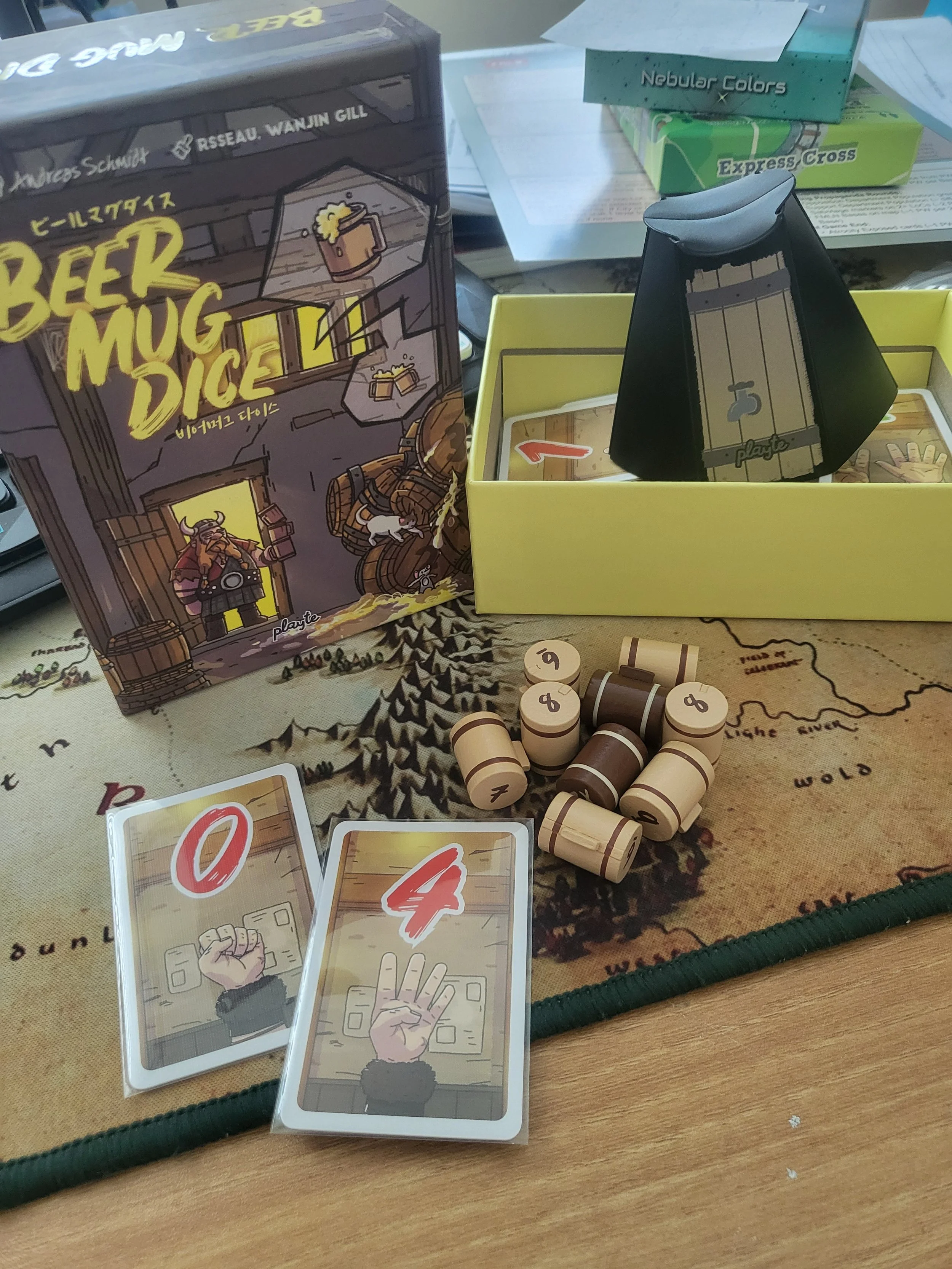
Beer Mug Dice by Andreas Schmidt, Art by Rsseau and Wanjin Gil
Beer Mug Dice has a lot of interesting things going for it. It’s kind of a multilayered push your luck game, where one player is playing a dice rolling game and the others are bidding and trying not go to bust against what the bartender player is rolling. On paper, I like each part of this game, but I don’t know that it comes together to create a satisfying whole. The game is a little too think-y to be a dumb push your luck party game, but at the same time it’s a little too chaotic and dumb to be a serious brain puzzler. The final game feels like less than the sum of its parts, and I can’t help but wonder if it should have been split in two and developed into separate games (not that I know what that would look like). I do really like the beer mug shaped dice though.
Rank: C
L-Board Rank: n/a
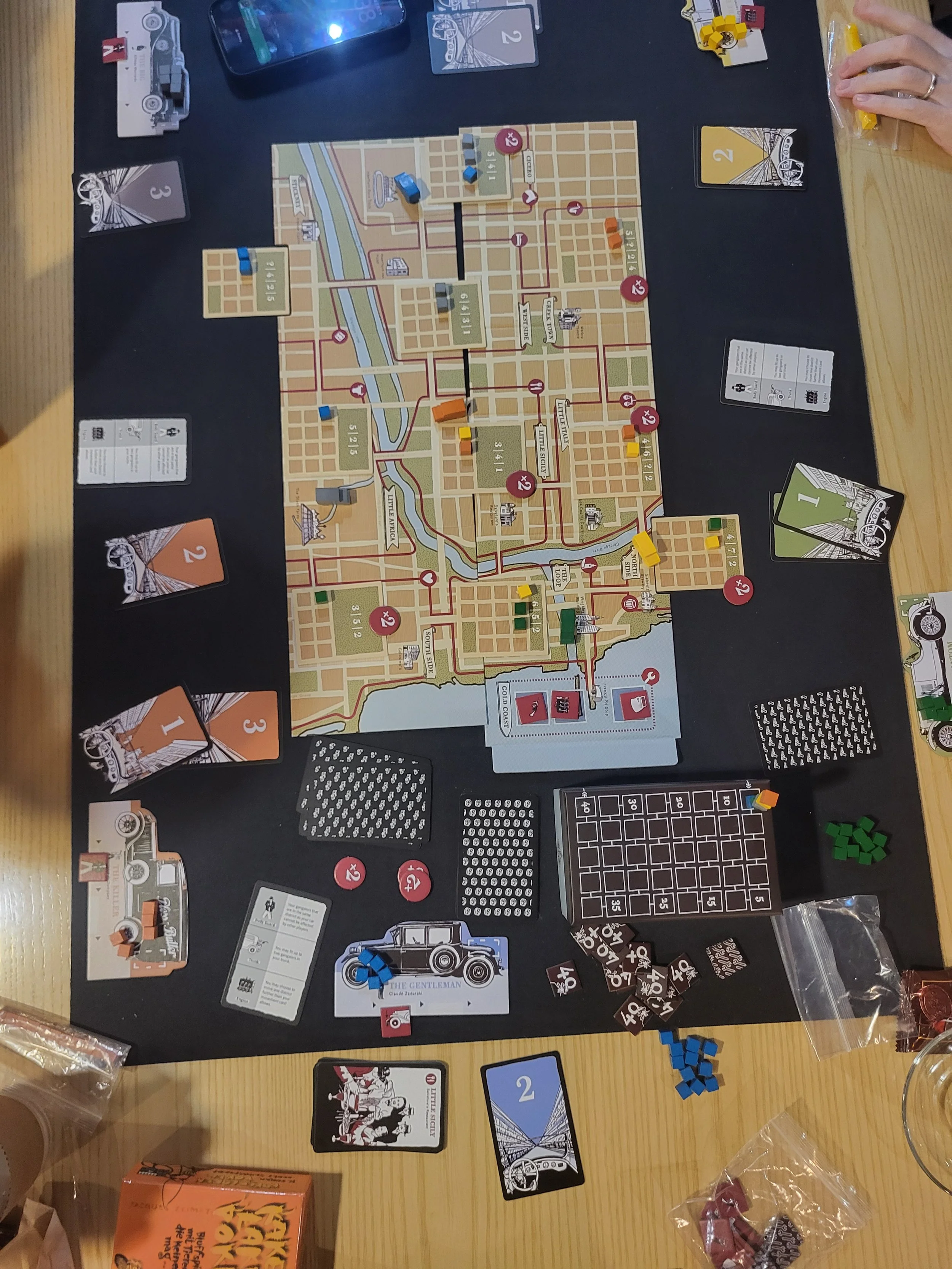
Gangster by Thorsten Gimmler, Art by Robert Nippoldt
I feel a bit bad for Gangster because it inhabits the incredibly competitive field of area control games, and that makes it a tough sell. Within that field I think it does a few interesting things. I am particularly keen on how in some of the areas you compete over, the points may be better for second place than for first, or the points for third and first might be the same. This disrupts some of the traditional math around taking control of an area, and when to bump someone down a spot. The extra spice of some spots having a random value assigned each round is also a nice touch.
Unfortunately, I’m not sure the rest of it excites me that much. The gangster theme is fun, especially since you can kidnap other player’s cubes, but in some ways I feel like it just doesn’t quite hold together in places. Probably it’s biggest problem, though, is that it is neither Big Shot nor Sardegna, both of which come in identically sized Playte boxes and both of which are amazing. Gangster is fine, but in this field it needs to be great to have a spot on my shelf.
Rank: B-
L-Board Rank: B- (it may be an error with my specific board, but the board didn’t line up right when unfolded)
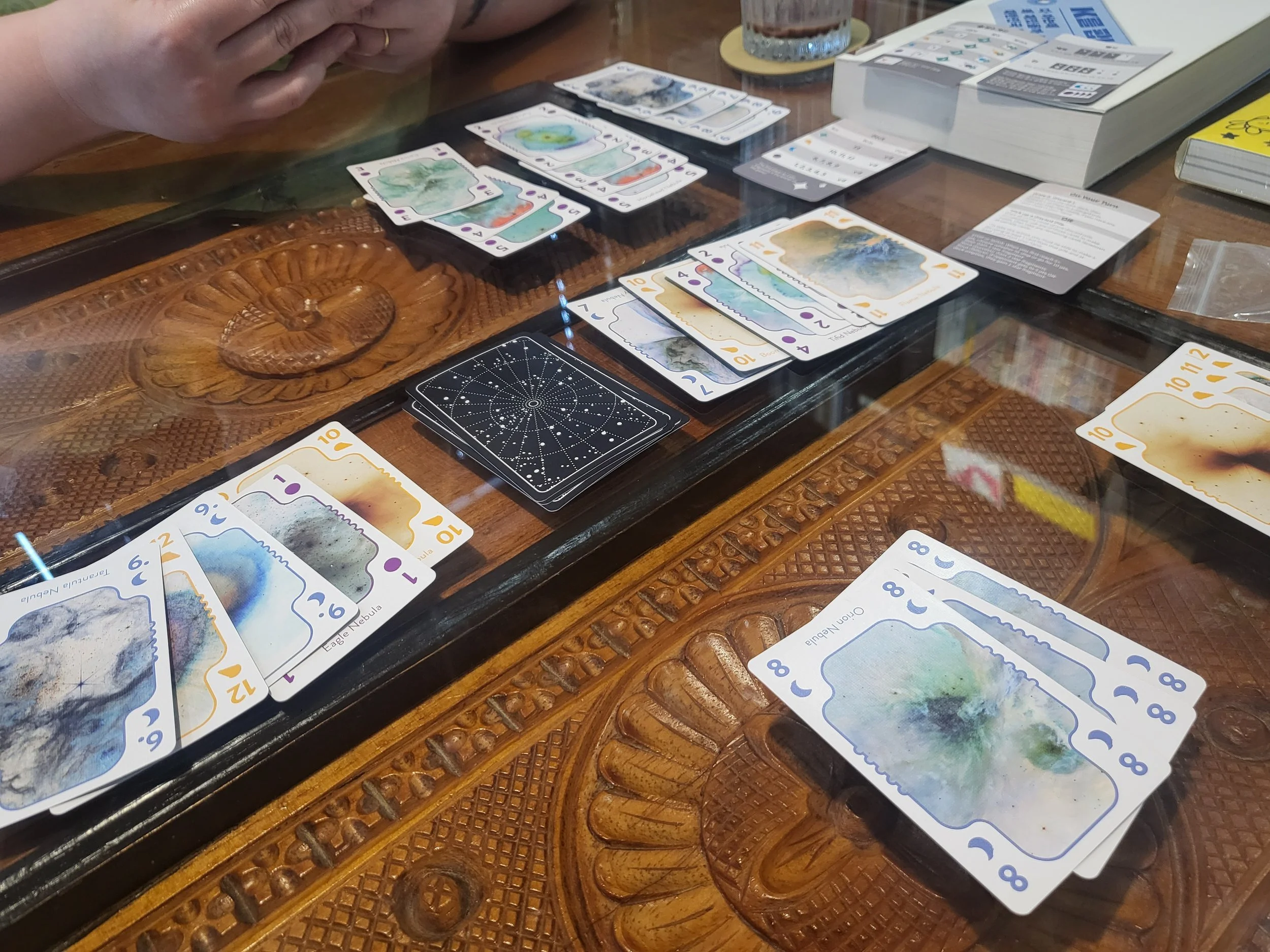
Nebular Colors by Marceline Leiman, Art by NASA
Nebular Colors feels like a classic card game that has maybe always existed. Playing it reminded me of the summer my older brother got a book of classic card games and we spent two weeks in a cabin by a lake in the woods playing as many games as possible with a classic 52 card deck. Nebular Colors does not use a classic set of card values, so it’s not exactly like that, but it still feels very similar. At the same time, my brother and I only played most of those classic card games once. We quickly found our favorites and let the others fall by the wayside. For me, while Nebular Colors feels like a really classic card game it doesn’t quite feel like one I want to play again and again.
Rank: B
L-Board Rank: n/a
the list so far:
Where is the fun if we don’t put the games from this and part 1 into an actual tier list template? So, without further ado, here are my rankings so far.
(Hey, if you like what I do here, maybe consider making a donation on Ko-Fi or supporting me on Patreon so I can keep doing it.)