
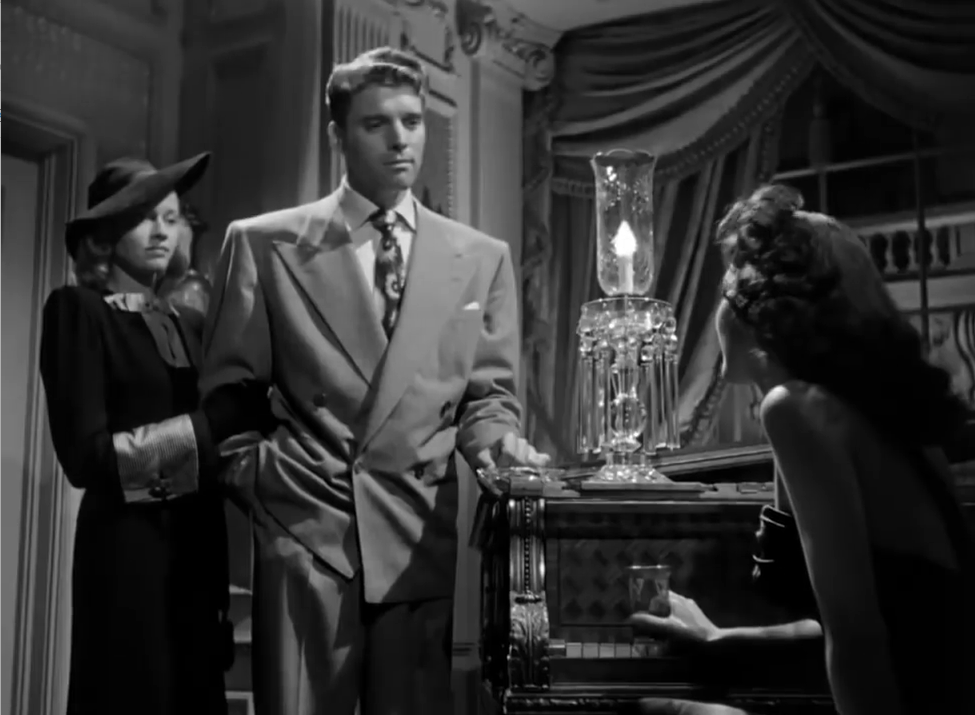
I’m not sure exactly when I first became obsessed with Film Noir. It may have been when I took an Introduction to Film Studies course in second year of university, but I had seen several noir classics even before then. My family watched quite a lot of black and white movies when I was growing up. These were more often traditional westerns rather than noirs, a product of several months spent in Arizona where we checked out basically every western the local university library had, but by age 18 I had seen at least Key Largo and The Big Sleep and probably a few others.
Despite being a big fan of noir as a genre, I had only seen the genre’s most famous members. I had tried to dive deeper over the years, but it was surprisingly hard to find noirs to watch – they are not readily available on most streaming platforms and DVD collections usually just have the same famous ones every time. Two factors came together last year to change that: the first was the discovery that there are a lot of old noir films on the Internet Archive and the second was my partner becoming very interested in noir as well. Together, we watched 117 noirs between September and the end of 2025, and we’re not planning on stopping in 2026. The end of the year makes a great time to reflect on noir and how my relationship with it has changed as I’ve watched way, way more films, so I decided to write a little something about it.
Film Noir: A Primer
The whole genre of Film Noir is a post-facto identity created by film critics (mostly French ones) looking back at American cinema from the 1940s and 1950s. It’s basically a genre born in books and written film criticism. That means that a lot has been written about what makes a film a noir, and what doesn’t. I have not read these books, for I have only dabbled in the scholarship of Film Noir. So, what I’m going to give below is my general notion of what makes a film a noir. These are open to debate and conversation; this is not an academic definition but rather the version of how I would explain this genre to a friend over a pint.
As I mentioned above, Film Noir was a genre that was identified after the fact. People making these movies did not consciously think they were working within a shared genre – they probably had some awareness of how their film was similar to others that would become the noir canon, but nobody was sitting down and deciding to make a noir. The exact parameters of noir have been debated, but I accept the general definition that they began in 1940 and ended in 1959 – with Orson Welles’ Touch of Evil often being credited as the last noir (debatable, but a satisfying end point).
Exactly what makes a film a noir as opposed to, say, a melodrama or simply a crime film is open to discussion (because of course it is). For me, noir has several key elements, which are:
They are a gritty depiction of life. These films are often, but not always, incredibly bleak visions of the world, and even the most optimistic are only finding joy in a grim world of crime, pain, and inequality. We often follow protagonists who are either investigating this grim world (detectives, insurance men, cops, newspaper reporters) or who are trying to survive in it (boxers, criminals, people who are down on their luck), which helps to emphasize the darker aspects of society.
As an addendum to the above, my partner feels that in a noir we should always be made to doubt the system. She rejects from the genre any movie that at its core says “trust the system and its agents, they will save us and make the world right”.
They look like noirs. Noirs have a clear influence from silent-era German Expressionist films – many of those German filmmakers, like Fritz Lang, went on to make noirs after they fled Nazi Germany – and they use light and shadow in stark contrasts to create a world of unreality. For this reason, I think noir works best as a black and white genre, and while I’m not so extreme as to exclude all color films from the genre, I remain skeptical of them.
There’s always a little nihilism. The film’s overall perspective doesn’t have to be nihilist, but you can see that exhaustion with the world and sense that nothing an individual does can ultimately fix it run throughout noir. When the protagonists are victorious, the victories are small and/or temporary. We’re not superheroes saving the world here.
The Femme Fatal – an evil woman who tempts the protagonist (usually in a sexy way) into committing crimes and otherwise making terrible decisions, often before betraying him. Not every noir must have a femme fatal, but they are one of the main tropes of the genre and something that you usually don’t see outside of it. While sometimes described as sexist, in many ways the femme fatal is a better expression of female independence and desire (one that often excludes the desires of men or fulfilling a traditional feminized role) than we see in many movies to this day.
An important element in classic Film Noir is the role of the Hays Code. The Hays Code was the semi-informal censorship that governed Hollywood films during the Golden Age (1929-1960). It was not a legal requirement, but it was enforced within the Hollywood system by Hollywood studios. It set many strict rules for decency in movies, but the most important ones for noir were that the villains could not win – evil must be punished. How this was applied could vary, though. Individual villains are always defeated, but greater social evils could endure. This one criminal will be punished for their crimes, but the syndicate can survive.
The thing that is fascinating about the Hays Code is that filmmakers were determined to work around it, so there are a lot of interesting subtexts in these movies that censors missed. My partner is frequently pointing out that often the queer representation is better in some of these movies than in modern Hollywood, it feels more authentic even if it can never be explicit. I’m by no means pro-censorship, and the Hays Code had many vile requirements (such as no interracial romance, ever), but it is interesting how the explicit censorship of the past created so many interesting moments and characters that seem to be absent from the hyper-capitalist incentives of modern Hollywood.
The Best Noirs (so far)
So, I watched 117 Noirs last year, and maybe you’re wondering: what were the best ones? Worry not! I am here to provide a breakdown of my favorites from last year. Most of the movies I watched were good and I even enjoyed most of the bad ones, but I can’t just post a list of 117 movies. A decision must be made somewhere to reduce this list to being almost manageable. If you want to see my full list, my partner and I made a spreadsheet with all the movies we watched, whether it was good, whether it was weird, and a short description to remind us of what movie it was amidst the sea of others. You can read it here. The list below is a more curated selection of my favorites – not necessarily the “best”, but the ones I enjoyed most.
The Classics
I had seen these movies before, but my partner had not, so we watched them together last year. Because they weren’t new to me, and because if you’ve clicked on an article about Film Noir you’ve probably seen them too, I decided to group them together.
Double Indemnity (1944), The Maltese Falcon (1941), The Big Sleep (1946), and Sunset Boulevard (1950) are among the best noirs, and maybe among the best movies, ever made. These have been written about ad nauseum, and I don’t have much to add. They are masterpieces, if you haven’t seen them, you should. I don’t want to focus on them here, though. Instead, I want to dive a little deeper and focus on movies you may not have heard of.
The Lady from Shanghai, dir. Orson Welles (1947)
This was the first of Orson Welles’ noirs that we watched, and it remains my favorite. It’s weird, and Orson Welles’ is Irish in it for some reason (the accent is a little ehhh but everything he says is perfect), but Orson could shoot the hell out of a picture. It just comes together so well while also being completely insane. I think all of his noirs (Journey into Fear and Touch of Evil especially) are worth your time, but for my money this is his best one. Forget finding the lost ending to The Magnificent Ambersons, give me the full cut of the funhouse ending from The Lady from Shanghai.
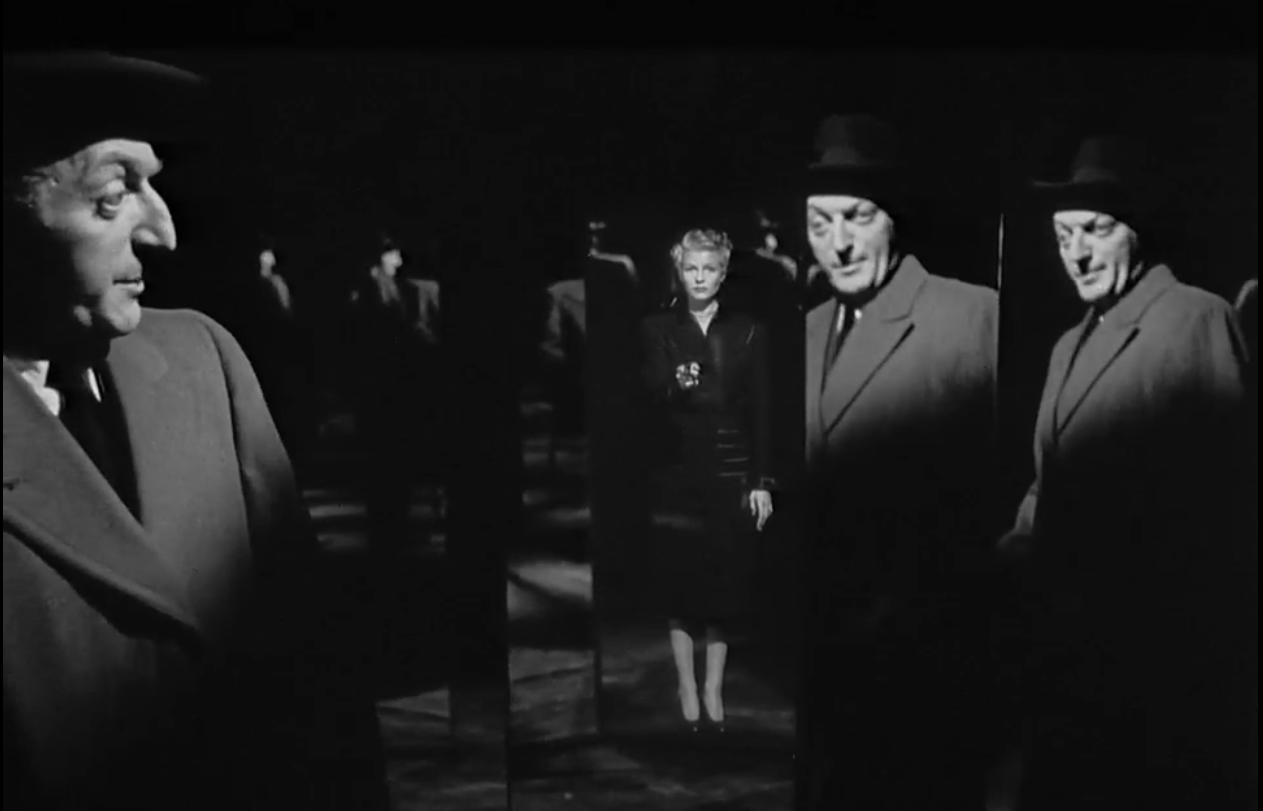
If you know one thing about The Lady from Shanghai it’s that it invented the shoot out in a hall of mirrors trope, and man it delivers on that. I wish the weird funhouse climax was longer, to be honest.
The Killers, dir. Robert Siodmark (1946)
The opening of this movie adapts an Ernest Hemingway short story, but from there the movie explores beyond the limits of its inspiration to find an answer to questions Hemingway left hanging. The picture resembles Citizen Kane in ways, with an insurance investigator interviewing people who knew a recently dead man, and I think it lives up to that comparison. It has some great performances, especially by the titular killers, and a wonderfully convoluted noir plot. This is a great movie.
Pick Up on South Street, dir. Samuel Fuller (1953)
Richard Widmark (a noir favorite) plays a pickpocket who steals a wallet that unbeknownst to him contains microfilm of important secrets that someone is planning to sell to the Soviets. This film combines a police procedural of trying to track down the thief with Cold War era espionage. It has some great criminals, including a top tier stool pigeon, and is a great marriage of noir, crime, and espionage.
This Gun for Hire, dir. Frank Tuttle (1942)
Professional hitman Raven, played by Alan Ladd, kills a guy and recovers some documents from him but is then betrayed by his employer and decides to get his revenge. Meanwhile, Veronica Lake plays a singing magician who gets wrapped up in his mission by accidentally sitting next to Raven on a train and then helps him elude her police officer partner, who is played by Preston Brooks who would become famous as Prof. Harold Hill in The Music Man. The climax is pretty wild, including a faked chemical attack on a factory with everyone in gas masks, and the whole thing is just a wondrously woven plot of crossing threads. And the main guy is named Raven!
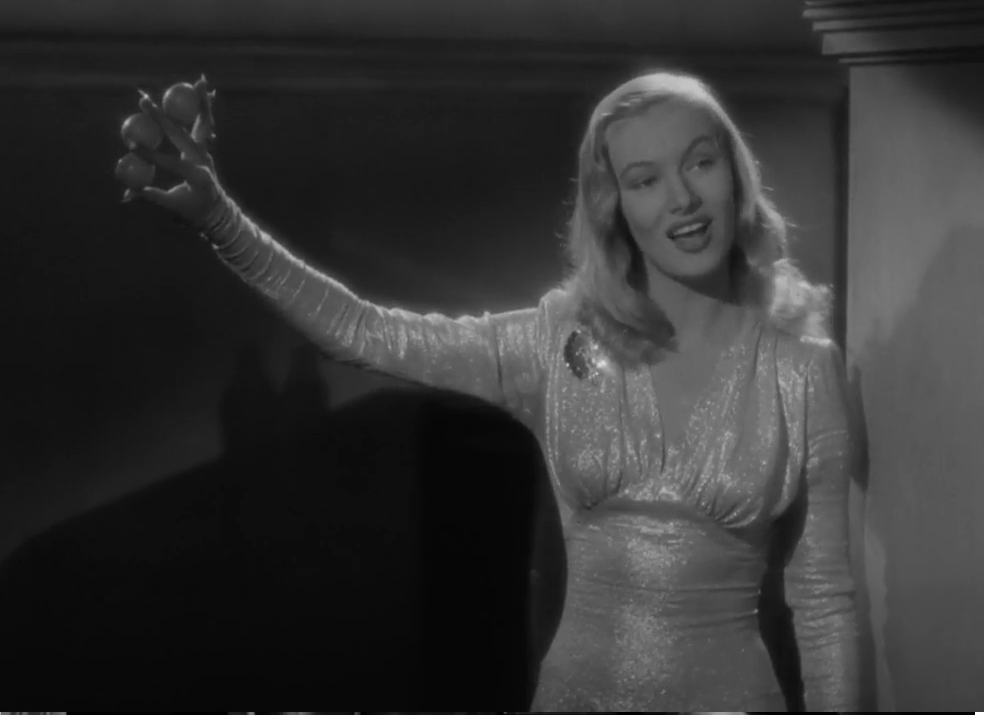
Come for the gritty conspiracy filled hitman focused noir, stay for Veronica Lake as a singing magician.
Laura, dir. Otto Preminger (1944)
Preminger made a lot of great noirs (and other films, Anatomy of a Murder being particularly noteworthy), but of his prolific output Laura remains my favorite. It starts out relatively simple: a woman named Laura has been found murdered and the detective must solve the case. He has several curious and suspicious characters to investigate and narrow down his list of suspects from, including a young Vincent Price. However, the film takes a dramatic twist at about the midway point that elevates it above its initial premise and delivers one of the most engaging whodunnit noirs I’ve seen.
DOA, dir Rudolph Maté (1950)
Our main character, played by noir-staple Edmond O’Brien, has been poisoned with “luminous toxin”, which the movie insists is a real thing even though it isn’t, and will die in only a few days. He then sets about solving his own murder as quickly as possible, retracing his steps from the previous night and trying to figure out why anyone would want to kill a nobody from a small town like him. It’s a great premise, and the movie delivers on it. What more could you ask?
Kansas City Confidential, dir. Phil Karlson (1952)
A florist gets the blame for a robbery he had nothing to do with, and so he does the next logical thing: he tracks down and infiltrates the gang who did it so as to identify them and bring them to justice while also clearing his name. You know, just some classic noir stuff. This eventually takes him to Mexico where he’s in a resort with the thieves but must identify them, and they must figure out whether he’s really a co-conspirator or not (they never saw each other’s faces during the crime). It’s got a great hook, a fun (if not too surprising) twist, and is just a great movie all around.
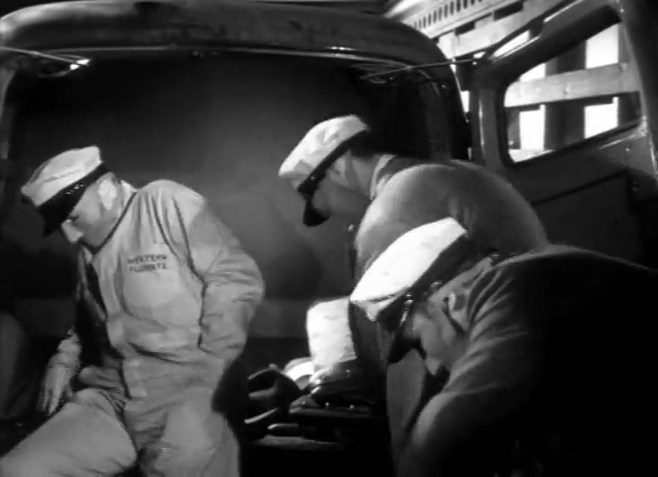
The robbers in their creepy ass masks. Bring back these kind of masks for bank robbers!
Sweet Smell of Success, dir. Alexander Mackendrick (1957)
Tony Curtis plays a kind of dickhead press agent who has been hired by an even bigger dickhead newspaper columnist (imagine, a time when having a newspaper column made you incredibly powerful) to break up said columnist’s sister and her jazz guitar playing boyfriend. He doesn’t do a great job, and things kind of spiral for him. It has some of the best one-liners in all of noir (not an official criterion for the genre, but one of my favorite elements) and some great performances and energy.
Out of the Past, dir. Jacques Tourneur (1947)
Out of the Past, starring noir staple Robert Mitchum, has an incredibly convoluted plot. It’s kind of about a retired PI remembering the time he had to find a mobster’s girlfriend after she shot said mobster and stole money from him, but it’s told across two timeframes and with some characters who, if I’m honest, look a little too similar for me to consistently remember who they are. Still, it is a great time with some fun mystery, a great PI character who’s a bit smarter than his opponents (but not by a lot), and some truly stellar dialogue.
They Drive by Night, dir. Raoul Walsh (1940)
Technically more of a proto-noir, They Drive by Night starts out as a story of two brothers trying to make it as truck drivers before pivoting to being a very noir-ish crime plot after Ida Lupino’s character does an ol’ husband murder (and develops a crippling fear of automatic doors). It is often pointed to, along with Rebecca (1940) and Stranger on the Third Floor (1940), as one of the three candidates for “First Noir”. While I think Stranger on the Third Floor is maybe the purest example of early noir, They Drive by Night is my favorite of the three.
Deadline U.S.A., dir. Richard Brooks (1952)
There are a lot of noirs about guys running newspapers or reporters working for them, usually caught up in a fight with some kind of organized crime outfit. While I’m a big fan of High Tide, I think Humphrey Bogart in Deadline U.S.A. is my favorite newspaper vs. mobster movie. It has a fun ensemble cast, and I just love seeing the big newspaper printing rooms. I don’t know if this is the best one in terms of plot, but noir is a lot about vibes and performance. Bogart is among the best to ever do it, and he delivers here.
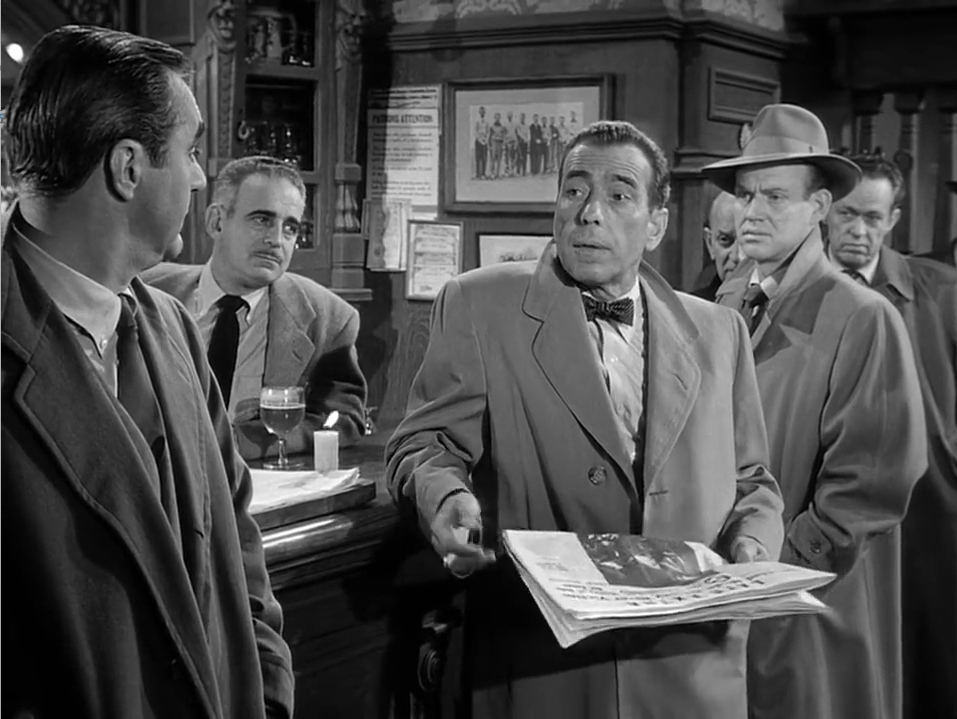
Bogart is really pro-newspaper in this, but he’s also the man publishing the newspaper. Conflict of interest Bogie!
Panic in the Streets, dir. Elia Kazan (1950)
Some criminals have snuck into New Orleans but, unfortunately for everyone, one of them has pneumonic plague and is incredibly contagious. Richard Widmark plays a doctor who must track down the source of the plague and stop its spread while treating people before they get too sick and die. However, because they’re criminals, they don’t want to be discovered. It’s a great multi-layered investigation that was actually filmed in New Orleans, using some of its locals in great character bits.
I will note that because this one has an element of “trust the system”, my partner doesn’t think it should count as a noir. I think it has enough crime and Widmark’s character faces enough opposition for it to count, but it is open to debate.
Bodyguard, dir. Richard Fleischer (1948)
Our main character gets suspended from the LAPD and then hired to be a bodyguard for an incredibly suspicious rich family, who, surprise, surprise, are doing some crimes. The MVP of this movie, though, is his girlfriend who is a 10/10 assistant that really does most of the work in the case. This one isn’t particularly special, but it’s a well-executed mystery/detective story that clocks in at 62 minutes. I love this genre.
The Naked City, dir. Jules Dassin (1948)
An Irish aul fella police detective solves the murder of a clothing model, plus some other murders that spiral out from there, in New York City. The lead performance is phenomenal and beyond that it’s just an amazingly well executed bit of detective fiction. I can see how it inspired a TV show (with different actors) that investigated further cases. It’s not doing anything weird or fancy, but you gotta respect the craft in executing a classic plot well.
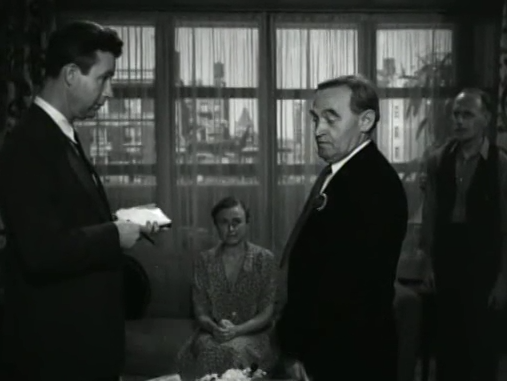
I would watch this wee aul Irish lad solve many a murder.
The Web, dir. Michael Gordon (1947)
A young Vincent Price plays the worst guy, who is kinda murdering his way to wealth through his co-conspirators while pinning his crimes on some poor schmuck lawyer who for some reason took a job as a bodyguard. MVP of this one is noir staple William Bendix playing a dumb looking but actually really clever police detective, and Vincent Price just being the evilest dude.
The Set-Up, dir. Robert Wise (1949)
There are surprising number of noirs that are about boxers and the horrors of being a boxer in the 1940s and 1950s. This feels like a weird fit, until you know that boxing was tied up with organized crime at the time and these movies are closely connected to other films that are about gambling and the criminal syndicates that ran them.
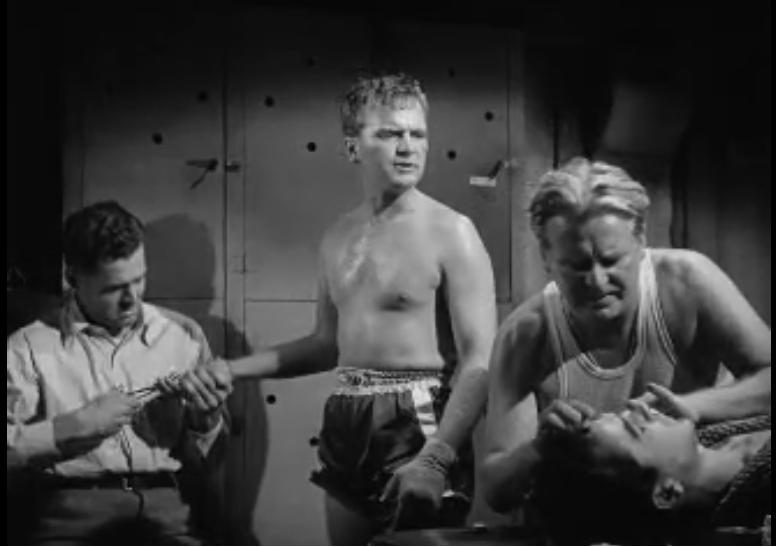
There are a lot of great ensemble shots and moments, with characters in various phases of being prepared for and recovering from fights. You really get an idea for who these people are, it has a lot of humanity, which to me is a big part of noir.
Almost all the boxing noirs I’ve seen have been great (special mention for The Harder They Fall, featuring my man Bogart, which is a blast), but my favorite is The Set-Up. The premise is simple, a manager for an aging boxer has taken money from the mob to get the boxer to throw his fight but decides not to tell the boxer so he can keep the money for himself. He’s betting that the guy will lose the fight anyway, so why bother to cut him in on the deal? You can see where this goes. In a beautiful touch, the movie is played in real time as we see the other boxers get ready for their fights and come back to the lockers after they are finished, following the relationships between these men as they do their job of hitting other men in the face. It’s an incredibly human story and it has you cheering for its protagonist by the end even as it maintains that grim nihilism that makes noir what it is.
The Man with My Face, dir. Edward Montagne (1951)
You have to have some respect for the B-picture: the second, lower budget movie that ran after the headlining film in classic cinemas. This one is a bit schlocky in all the right ways. A guy comes home to find someone with his exact face living there, and nobody recognizes him! Not his wife, not his dog, nobody. At the same time, some evil dude is doing murders with a killer attack dog. For some reason it’s all set in Puerto Rico. If that premise sounds good, let me tell you that the movie delivers on it. If it sounds too absurd, well I don’t know what to say. Maybe we can’t be friends.
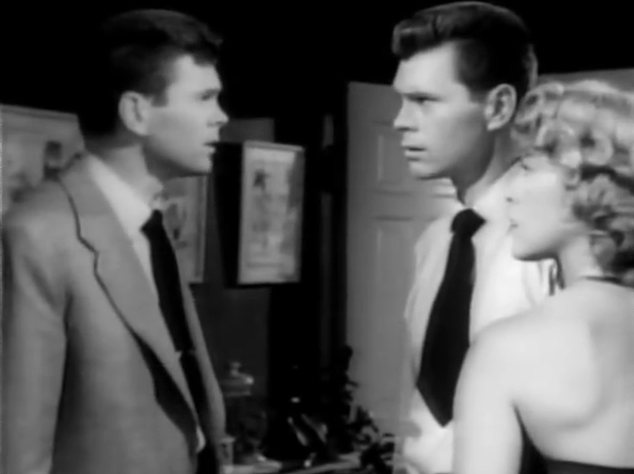
The man has his face! The same face you guys!
The Big Clock, dir. Jonathan Latimer (1948)
The main character of this movie is editor-in-chief of a magazine and the plot hinges around a major media mogul, but it’s not really a newspaper noir because instead of fighting against corruption or organized crime, it’s about a murder and a character simultaneously trying to find the killer and not be blamed for it himself; a classic noir set up. It also, and this is important, features a really big clock. The characters are all a lot of fun, and the film packs a good balance of whimsy and melodrama into its story. Plus, the villain is completely insane in exactly the right way (obsessed with time), and even if the protagonist is a bit of heel, you still root for him over the bad guy.
Night and the City, dir. Jules Dassin (1950)
Another great Richard Widmark role, this time as a hustler who is just one scheme away from finally making it as he spirals wildly out of control in London’s underworld. This one has an almost Greek Tragedy (and also a big Greek wrestler) feeling as a man’s hubris and quest for success, and those who go along with him, ultimately ends in complete disaster for him (and maybe the others). It has some great performances, and some truly dreadful characters. It’s classic nihilistic noir that builds to a fever pitch before releasing a sigh of cathartic disaster.
What are your favorite noirs? I am always on the lookout for recommendations. There are, by some estimates, over 700 noirs so it’s easy for me to miss some classic I’ve never heard of!
(Please note that the management will not be accepting the submission of neo-noirs at this time.)
(Hey, if you like what I do here, maybe consider making a donation on Ko-Fi or supporting me on Patreon so I can keep doing it.)